
Knights Foundry

Foundry Melting & Pouring

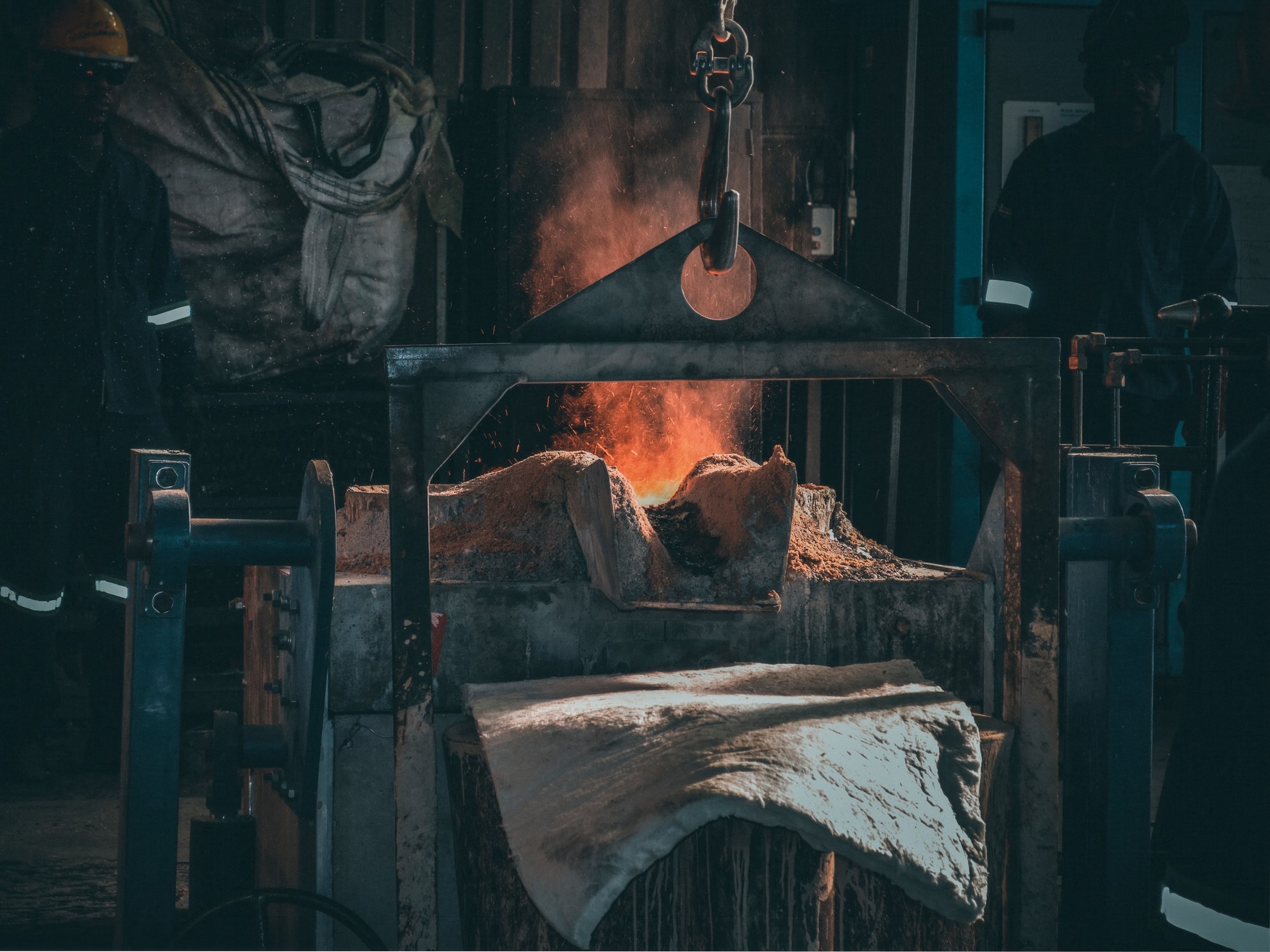
Knights Foundry melts ferrous alloys for scheduled production at its Wadeville, Gauteng facility using six melting furnaces with charge sizes from 500 kg to 5 tonnes. Melt chemistry is checked against the customer specification before release for pouring.

Molten metal melting and pouring at Knights Foundry in Wadeville, Gauteng
Melt Control Prepared against the production job

Each melt is charged to the scheduled job and specified material grade. Metallurgy then checks the chemistry with Optical Emission Spectrometry (OES).

Release & Traceability Poured only after specification release

Pouring starts only once the melt matches the required specification. The production record links the job through metallurgy approval, pouring and the finished casting.

Six-Furnace Melting Capacity

Charge capacity is spread across six furnaces, allowing production to be matched efficiently to both smaller batches and large industrial castings.
Furnace 1500 kg
Furnace 2600 kg
Furnace 3800 kg
Furnace 42 tonnes
Furnace 5500 kg
Furnace 65 tonnes
5-tonne melting furnace at Knights Foundry in Wadeville, Gauteng

Melt Control & Specification Release

Chemistry control is part of the melting route, with the melt held until the required material specification is aligned for the production job.

Production Job Control

Melting is carried out against the scheduled production jobs and the material requirements recorded for each casting.

Controlled Melting

The appropriate furnace capacity is used for the production requirement before the melt moves to chemistry verification.

OES Chemistry Check

Optical Emission Spectrometry verifies chemical composition against the customer's specified material requirements.

Specification Release

No melt is released for pouring until the required chemistry is aligned with the applicable specification.

Controlled Pouring & Casting

Once metallurgy has released the melt, approved molten metal is poured into the closed moulds. The casting method uses controlled feeding, solidification and metal-flow principles to support consistent production.

Modulus-Based Calculations

Modulus-based casting calculations support solidification control and riser design for the casting.

Directional Solidification

Directional solidification is applied to help control shrinkage as the casting cools and solidifies.

Risers & Feeders

Risers and feeders are positioned to maintain molten-metal feeding during solidification.

Controlled Gating

Gating is designed to control metal flow and reduce unnecessary turbulence during filling.